
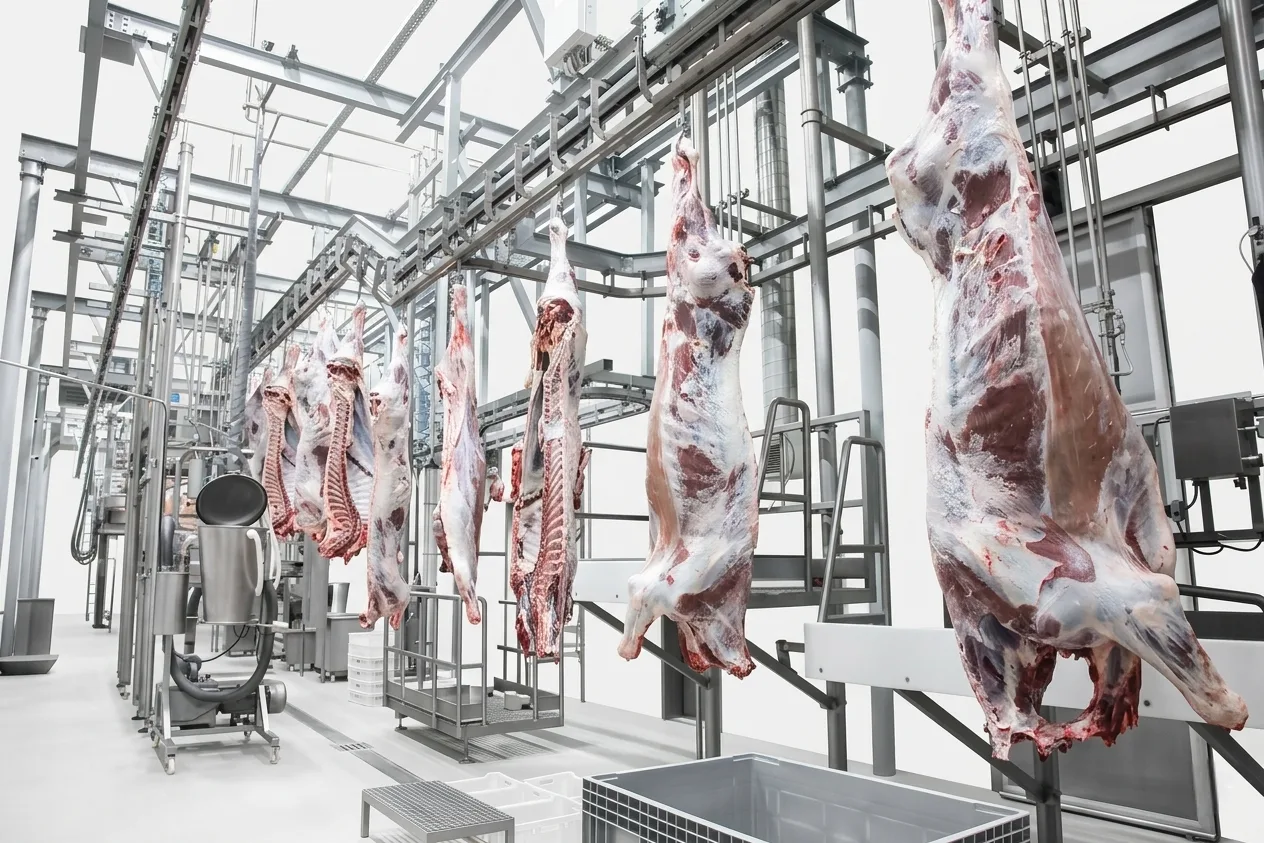
Overhead Rail Systems
Tam otomatik kanama, işleme ve sevkiyat havai hat konveyör sistemleri.
Slaughterhouse Rail Systems & Overhead Conveyor Lines
Rail systems are the circulatory system of any modern slaughterhouse, enabling smooth and hygienic transportation of carcasses throughout the processing line. Mezbaha Ekipmanları designs and installs complete overhead rail systems—including monorails, bi-rails, transfer switches, and weighing stations—for cattle, sheep, and poultry facilities of all sizes.
Our stainless steel and hot-dip galvanized rail systems are engineered for continuous industrial operation in humid, chemical-heavy environments. Modular design allows custom layouts tailored to your facility's floor plan and throughput requirements. Integrated switching systems enable efficient routing between slaughter, dressing, chilling, and dispatch areas without cross-contamination.
Overhead rail systems eliminate floor-level contamination risks by keeping carcasses suspended throughout processing. This is a fundamental requirement for HACCP compliance and EU export certification. Our rail profiles are available in round, square, and I-beam configurations, with trolley systems matched to specific load requirements.
From initial design through to installation and commissioning, our engineering team works closely with clients to optimize rail layouts for maximum throughput and worker ergonomics. We also offer retrofit and expansion services for existing facilities looking to upgrade their conveyor infrastructure.
Frequently Asked Questions
What types of rail systems are used in slaughterhouses?
Slaughterhouses use monorail systems (single overhead track), bi-rail systems (two parallel tracks), transfer switches for routing between lines, and integrated weighing rails. The system choice depends on throughput, species processed, and facility layout.
What materials are slaughterhouse rails made from?
Rails are manufactured from hot-dip galvanized steel or stainless steel (AISI 304/316). Stainless steel is preferred in areas with frequent chemical washing, while galvanized steel is cost-effective for low-humidity zones like chilling corridors.
How are rail systems installed in existing facilities?
Our engineers survey the existing facility and design a rail layout that integrates with your current infrastructure. Installation is typically phased to minimize production downtime. We provide full structural calculations and handle ceiling fixings, supports, and rail alignment.
Can rail systems include automatic weighing functions?
Yes. We integrate load cell-based weighing stations directly into the rail system. Carcasses are automatically weighed as they pass through, with data logged to your management system for traceability and yield analysis.
How do I ensure rail system hygiene?
Rail systems should be cleaned daily using pressure washers and food-grade detergents. Trolley wheels and axles require regular lubrication with food-safe grease. Stainless steel components can withstand aggressive cleaning agents, while galvanized sections should be inspected regularly for zinc layer integrity.
Request a Quote for Your Project
We analyze your needs and develop solutions tailored to your facility. Get in touch with us.